

Can Therapy Help Anxiety? Finding Your Way Back to Calm

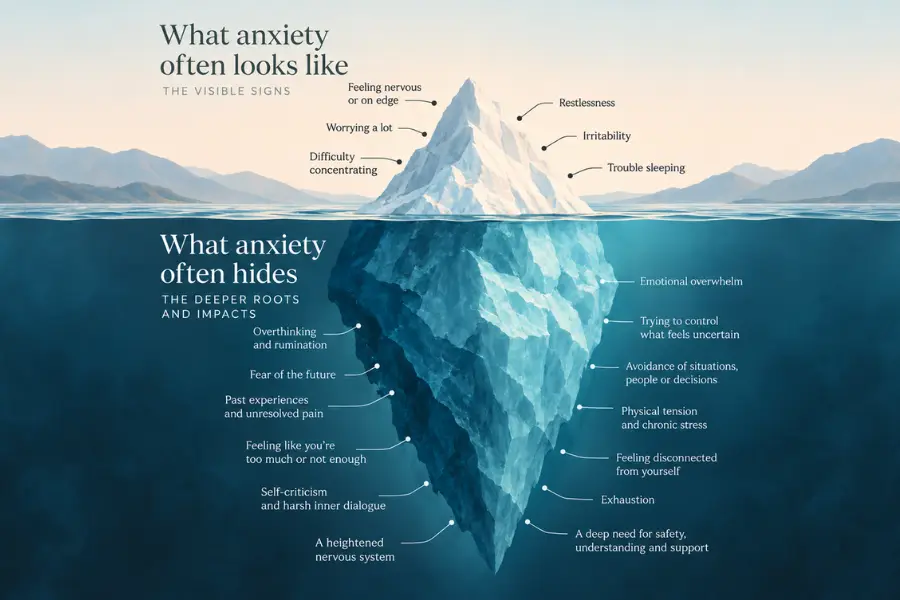
Iceberg illustration showing visible signs of anxiety above the water, such as worry and restlessness, and less visible experiences below, including overthinking, avoidance and exhaustion.
Leaf-line divider CENTER
Anxiety, like many mental health struggles, isn’t a one size fits all situation. It doesn’t always look like panic, overthinking or panic attacks. Each individual is different, and if you struggle with anxiety symptoms, you might be looking for something more than just another list of coping strategies….

How does counselling actually help anxiety?

Understand and Identify:

Eventually, individuals begin to recognize that their symptoms are more than “just being stressed,” and counsellors can help identify and navigate some of the root causes, patterns, or current coping skills that are contributing to, not preventing, anxiety in your life.

Manage:

Once we know a root cause, we can create specific coping skills and process the root causes, through therapies like CBT (cognitive behaviour therapy), Somatic Therapy (body focused) or EFT (emotion focused therapy). This could include learning to stop thoughts before they spiral, boundaries in relationships where interactions are unhealthy, or skills to manage daily priorities. Being up to date on a variety of modern therapies allows me to utilize skills specific to you, as an unique individual, instead of just one.

Grow Confidence:

Knowing someone has your back and can hold space for you regardless of your progress, can make all the difference. Many clients’ anxiety stems from a belief that they are alone, and counseling helps dispel that fear. Therapies like ACT (acceptance & commitment therapy) use interventions like role playing, where you can practice your new skill with your counsellor until you feel ready to try it in the real world!

What does a 60-minute anxiety therapy session look like?

Spiralling thoughts might involve exploring a specific trigger that happened recently, by identifying the thoughts and behaviours connected to the trigger, then working together to brainstorm alternative ways to respond next time. We may explore patterns of worry, avoidance or self-criticism to better understand what’s happening for you in the moment. CBT is a great therapy for this type of anxiety.

Physical anxiety, like panic attacks, knots in your stomach, or tension, Somatic therapy would be used to understand how symptoms show up in your body. Together we may explore grounding, body awareness and ways to regulate your nervous system at a pace that feels comfortable for you. The goal isn’t to force yourself to calm down, or even to remove triggers that may not be removable, but to develop an understanding of your body and provide choices for the future.

Regardless of how anxiety manifests for you, each session begins with a chance for you to review and discuss current issues or frustrations, in a calm and safe space. We often find a direction for each session with just a few minutes of venting in a safe space. Not knowing what to talk about is a big fear for many clients, but that’s where your counsellor steps in. You are the pilot who sets the goal, the counsellor is the co-pilot who navigates the journey for you.

"You decide the destination, your counsellor navigates the route there. "

— Chelsey Foote

You don’t have to wait until anxiety becomes overwhelming to seek support. If you’re ready to better understand your anxiety and explore ways to move forward, counselling can be a great place to start. At Wild Sage Counselling, I offer a compassionate, collaborative space to work through what you’re experiencing, at your own pace, with same week appointments available now. Book a free 15-minute consultation for more information on how counselling can help you and your anxiety!

Frequently Asked Questions

How do I know if I need therapy for anxiety?

Relationship conflict, lack of sleep, avoidance of tasks or situations, and that feeling of butterflies in your stomach never going away, are often signs of anxiety. You don’t have to wait until it begins to take over, reaching out for help at any point in your journey is a step in the right direction.

What type of therapy is used for anxiety?

As each individual is unique, so are the types of therapy that work for them. As a person-centered therapist, I focus on what works for you. Each treatment plans works to heal you holistically, through CBT, EFT, Somatic and many other modalities.

How long does therapy take to help anxiety?

Each case is different, and it can depend on a lot of different factors. Our goal is to help you feeling better in a safe, effective, and long-term way. By adding skills to practice each session, you leave with coping techniques and a better idea of why you feel this way.
Leaf-line divider CENTER

About the Author

Chelsey Foote, BA, MACP

Counsellor | Wild Sage Counselling

Chelsey of Wild Sage Couselling outside smiling

Chelsey Foote is a counsellor and founder of Wild Sage Counselling. She works with adults navigating anxiety, trauma and PTSD, grief and loss, emotional overwhelm, relationships, identity, and life transitions. Her person-centred approach draws from evidence-informed therapies including ACT, CBT, mindfulness, psychodynamic therapy, and Emotion-Focused Therapy.

Chelsey believes counselling isn’t about fixing what’s “wrong” with you. It’s about creating space to better understand yourself, loosen the grip of old patterns, and move forward with greater compassion and clarity.

Share this post :

Recent Blogs